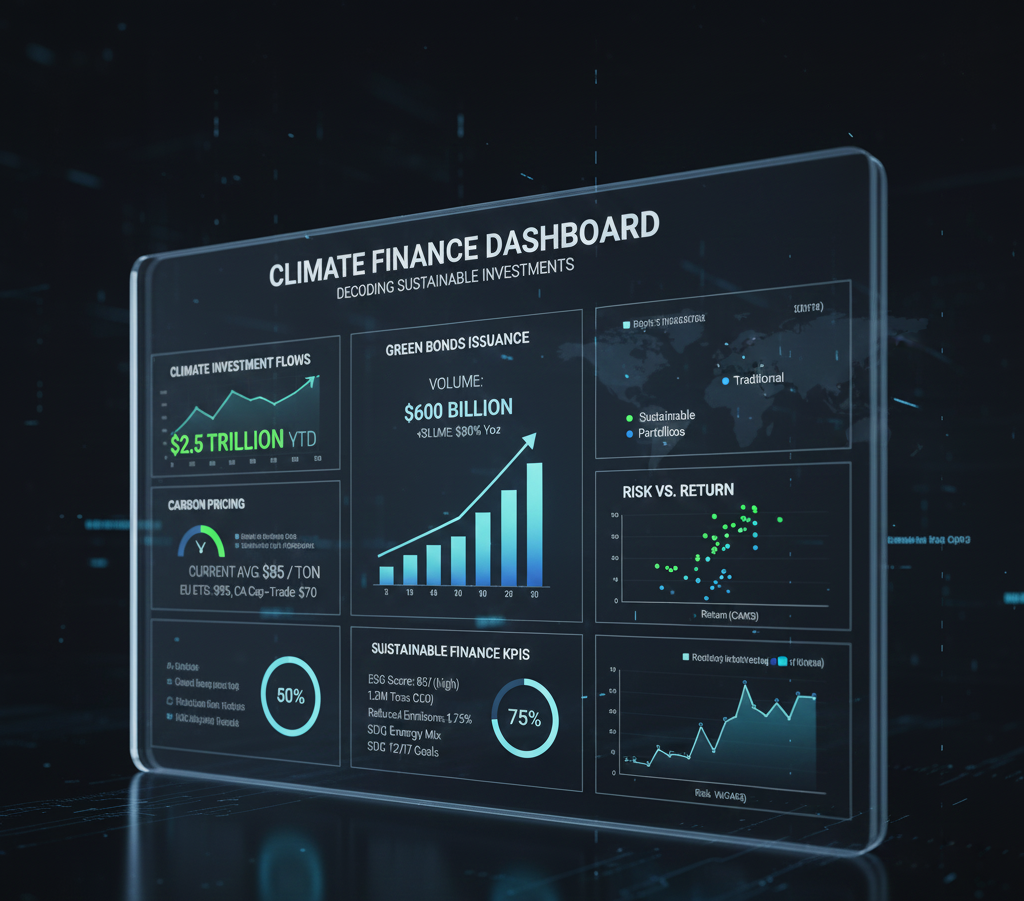
Decoding Climate Finance: Opportunities for Corporations and Investors
Climate finance is transforming the way businesses and investors approach capital allocation. As the global economy moves toward low-carbon solutions, understanding climate finance is no longer optional—it’s essential. Corporations and investors that strategically navigate this space can unlock new revenue streams, manage climate-related risks, and contribute to a sustainable future.
What is Climate Finance?
Climate finance refers to investments that support low-carbon, sustainable development and help address climate-related risks. This includes funding for renewable energy, energy efficiency projects, sustainable infrastructure, and green technology innovations. Corporations can access climate finance through various mechanisms, including green bonds, ESG-linked loans, and government incentives.
Investors, meanwhile, increasingly prioritize companies with strong climate strategies. By evaluating carbon footprints, climate risk exposure, and sustainability commitments, they identify opportunities to generate both financial returns and positive environmental impact.
Opportunities for Corporations
For businesses, climate finance is more than a source of funding—it’s a tool to drive strategic growth. Key benefits include:
- Lower capital costs: Green bonds or ESG-linked loans often carry favorable interest rates.
- Market differentiation: Demonstrating leadership in sustainability attracts conscious consumers and investors.
- Risk mitigation: Integrating climate risk assessments protects operations from regulatory changes, extreme weather events, and supply chain disruptions.
For example, a company that invests in renewable energy infrastructure can reduce its energy costs while accessing government incentives, thereby improving both its sustainability metrics and financial performance.
Opportunities for Investors
Investors are increasingly factoring climate considerations into portfolio decisions. Companies with credible climate strategies are seen as lower-risk, long-term investments. Climate finance allows investors to:
- Participate in sustainable projects with measurable impact.
- Hedge against climate-related market volatility.
- Align portfolios with ESG mandates or sustainability-focused funds.
Challenges and Considerations
Despite its potential, climate finance requires careful planning and management. Corporations must ensure transparency, credible reporting, and alignment with international ESG standards. Investors must evaluate risk profiles and verify that projects deliver measurable climate outcomes.
Conclusion
Climate finance represents a convergence of responsibility and opportunity. By strategically leveraging climate funding, corporates can enhance operational resilience, while investors can support projects that drive sustainable growth. Together, this collaboration accelerates the transition to a low-carbon economy.





Leave a Reply