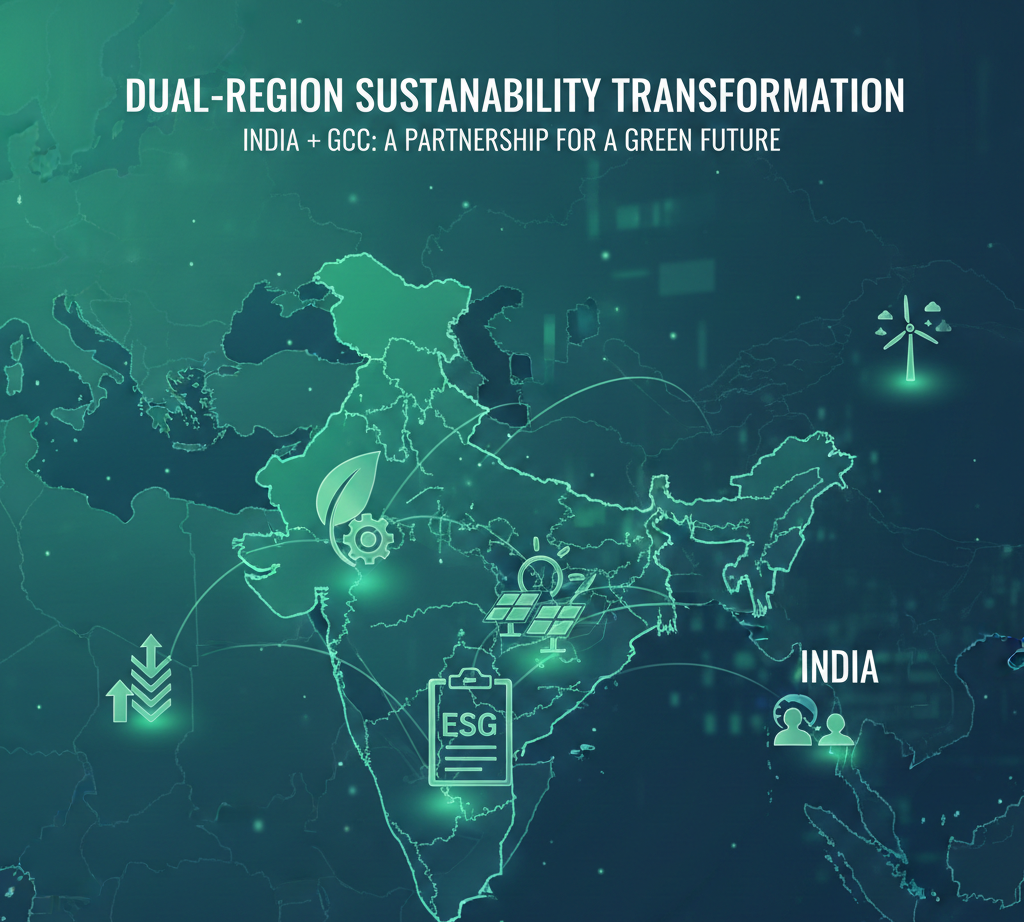
From Compliance to Competitiveness: The Future of Sustainability in India & GCC
Sustainability is evolving rapidly across emerging markets, particularly in India and the Gulf Cooperation Council (GCC). Once considered a regulatory obligation, sustainability is now being recognized as a key driver of business competitiveness. Organizations that proactively adopt sustainable practices can optimize operations, reduce costs, attract ESG-focused investors, and enhance brand credibility.
The Regulatory Shift
Governments in India and the GCC are increasingly encouraging sustainable practices. India’s corporate ESG reporting mandate and the GCC’s green initiatives provide frameworks and incentives for businesses to integrate sustainability into their operations. These regulations are no longer just legal obligations—they present opportunities to innovate and differentiate in the marketplace.
Sustainability as a Strategic Lever
Forward-looking companies are moving beyond compliance to leverage sustainability for strategic growth. For instance:
- Adopting renewable energy solutions can reduce operational costs and lower the carbon footprint.
- Sustainable supply chain practices enhance efficiency while reducing risks associated with resource scarcity.
- Social initiatives, including community engagement and employee well-being programs, enhance stakeholder trust and retention.
The Competitive Edge
Companies in India and the GCC that successfully embrace sustainability are reaping tangible benefits. These organizations attract investors who prioritize ESG performance, differentiate themselves from competitors, and appeal to increasingly conscious consumers. For example, businesses that demonstrate credible sustainability practices can access international markets where ESG compliance is a prerequisite.
Looking Ahead
The future of sustainability in India and the GCC is clear: businesses that treat ESG as a strategic priority, rather than a checkbox, will outperform peers. By integrating ESG into business models, organizations not only mitigate risk but also unlock innovation, efficiency, and long-term growth potential.
Conclusion
Sustainability has shifted from compliance to competitiveness. Companies that embrace this evolution can transform challenges into opportunities, ensuring resilience, profitability, and positive societal impact.





Leave a Reply